


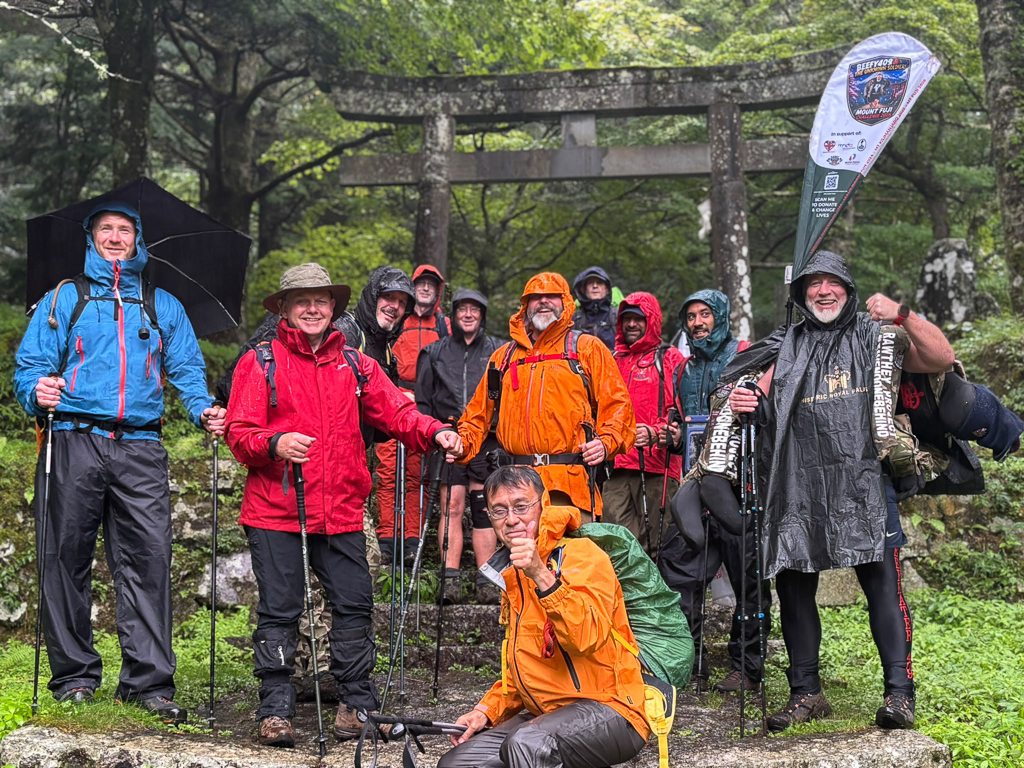
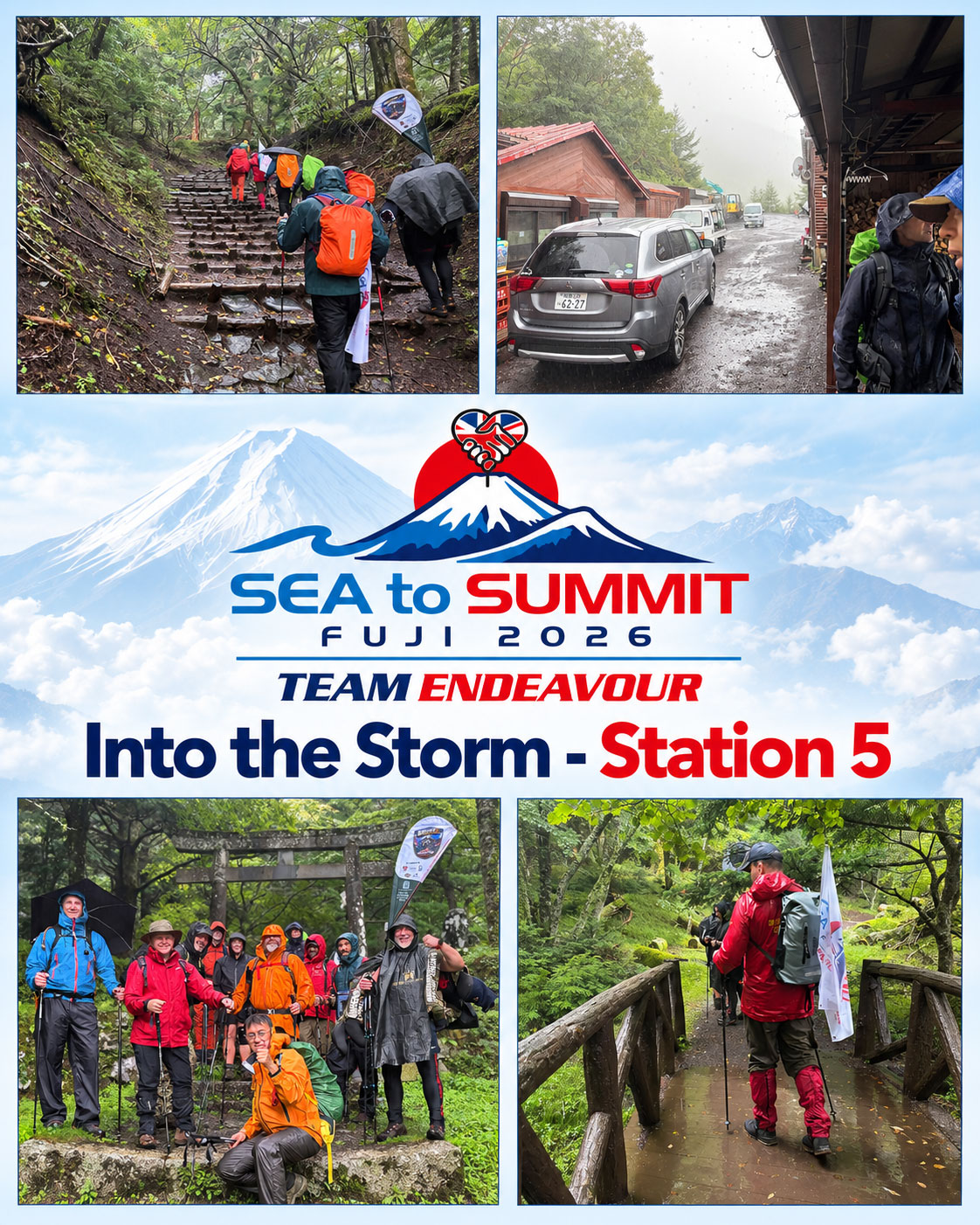
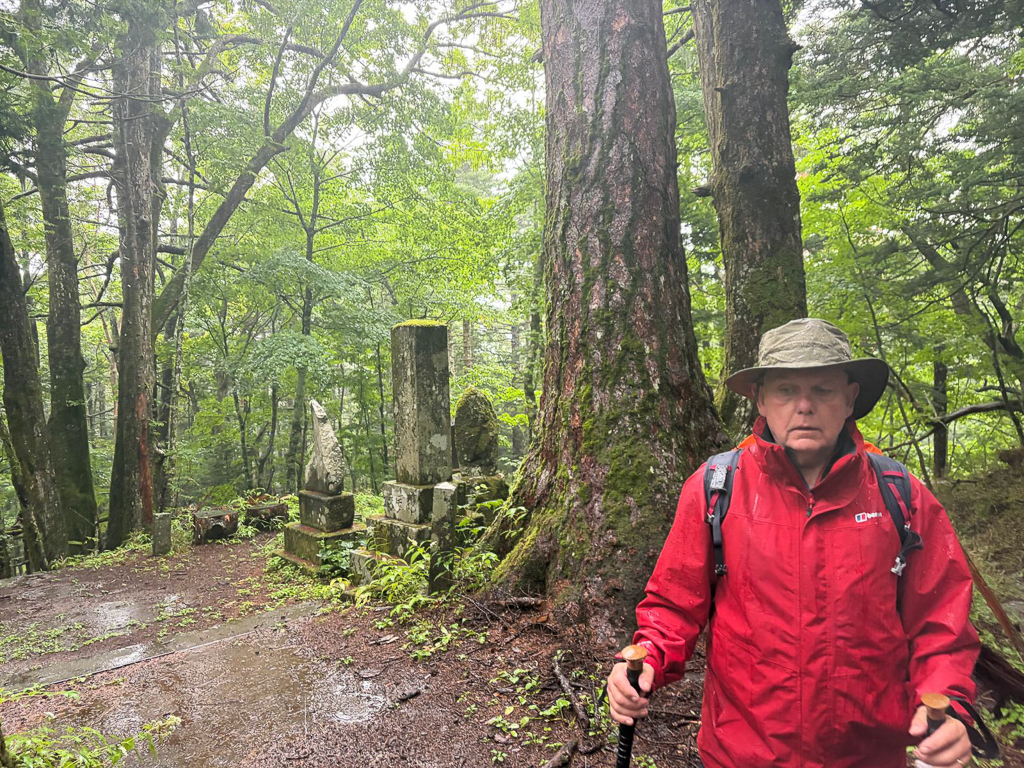
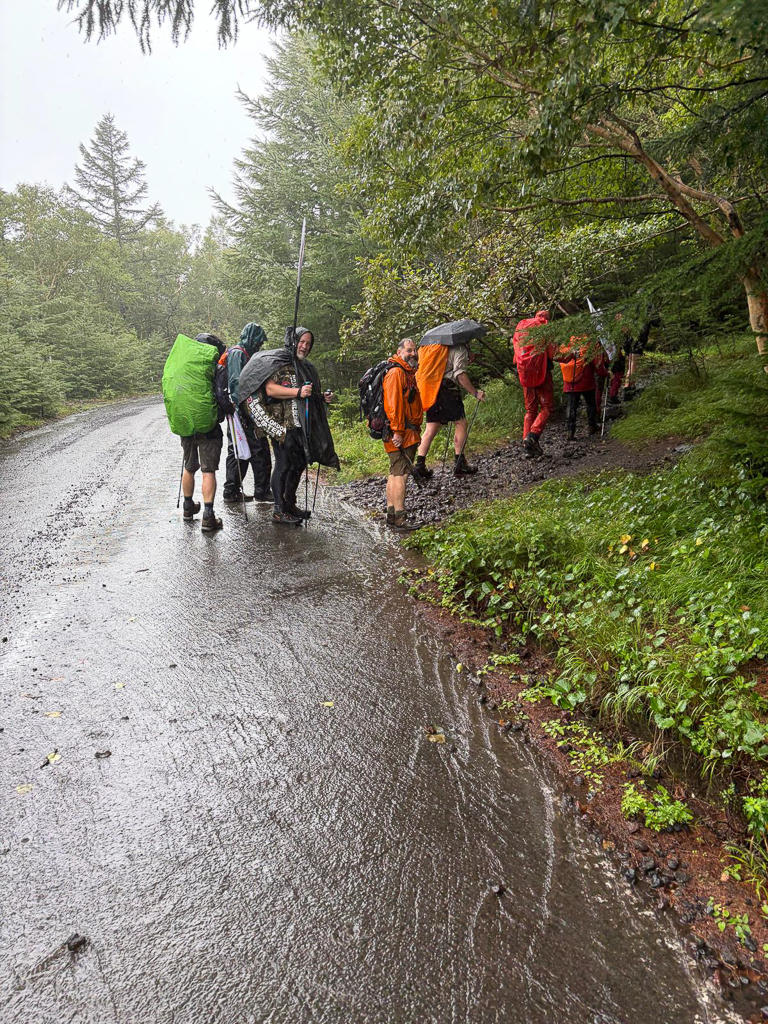
Team Endeavour together on the historic Yoshida route in relentless rain.
Typhoon 24 was far to the south – but its weather was very much on the mountain.
A day when the weather changed the challenge
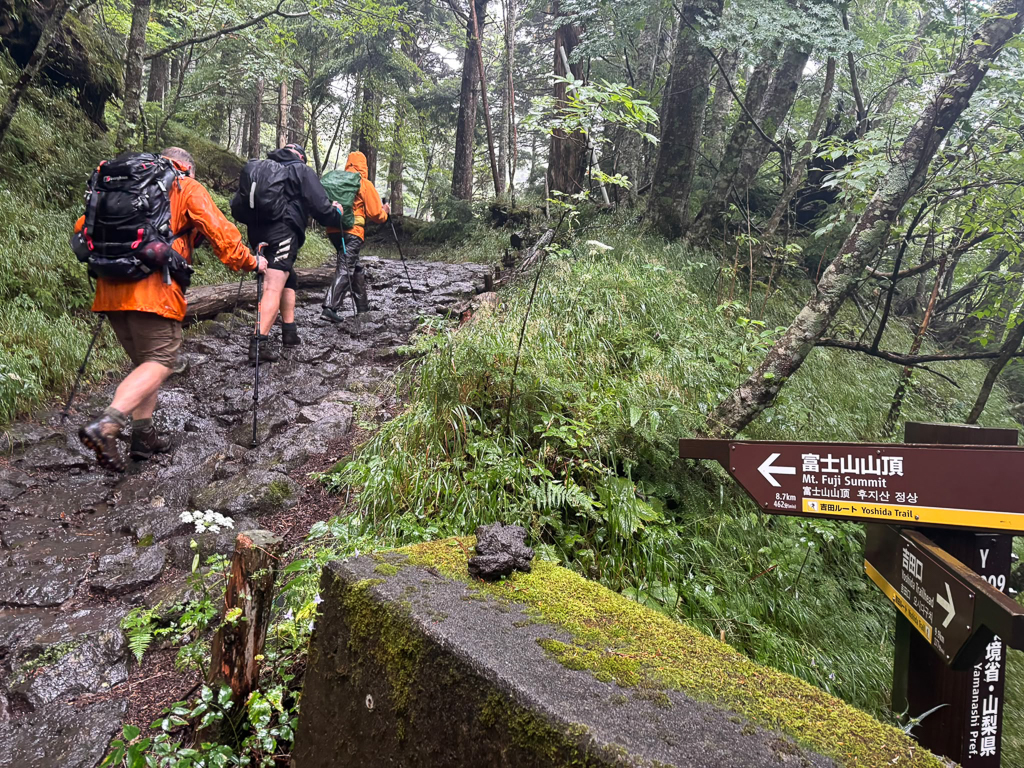
On paper, the task was straightforward: keep climbing the old Yoshida pilgrim route from the lower stations towards Mount Fuji’s 5th Station. The reality was a saturated forest, slippery volcanic ground and a day that quickly became less about pace and more about patience, balance and teamwork.
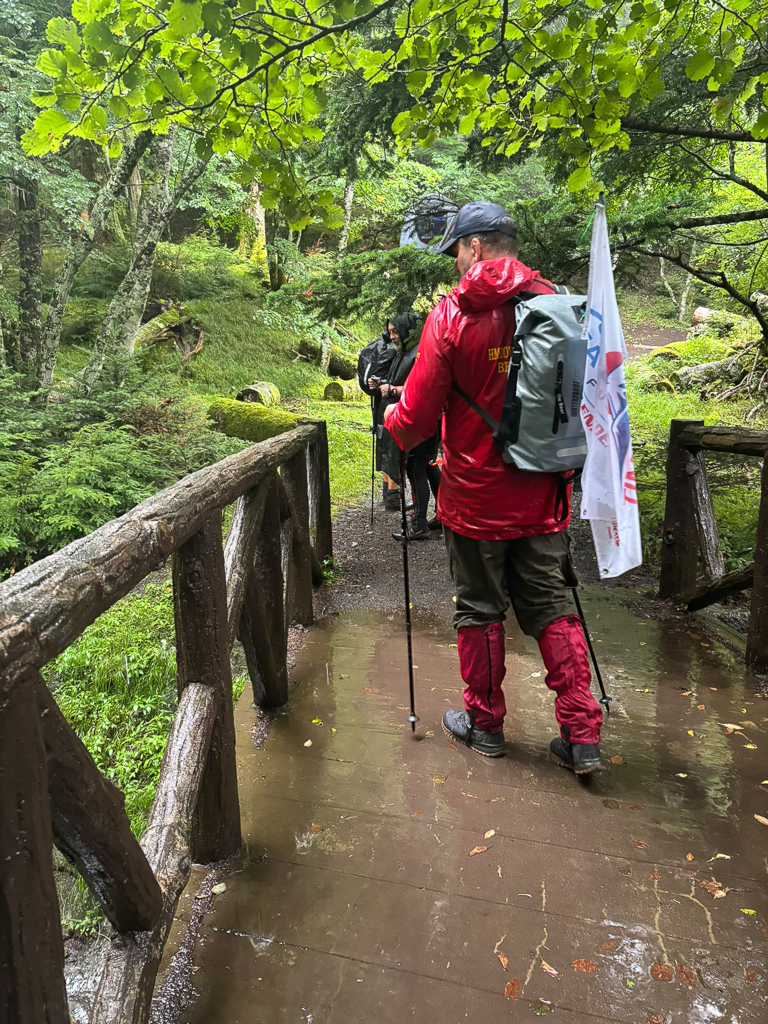
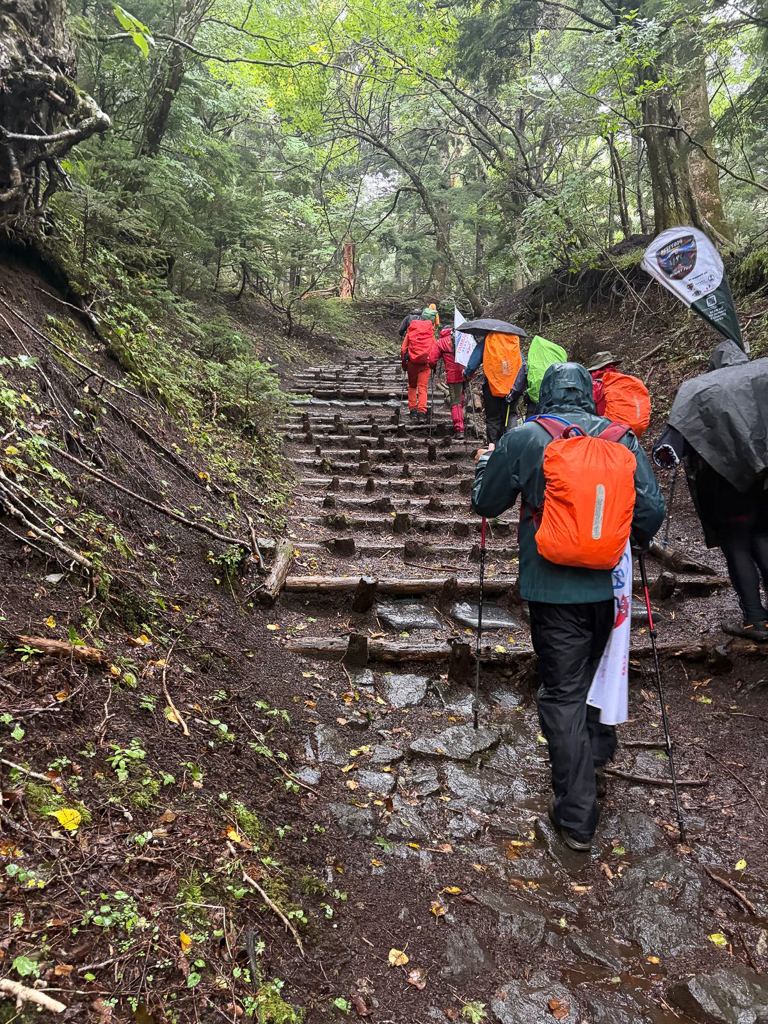
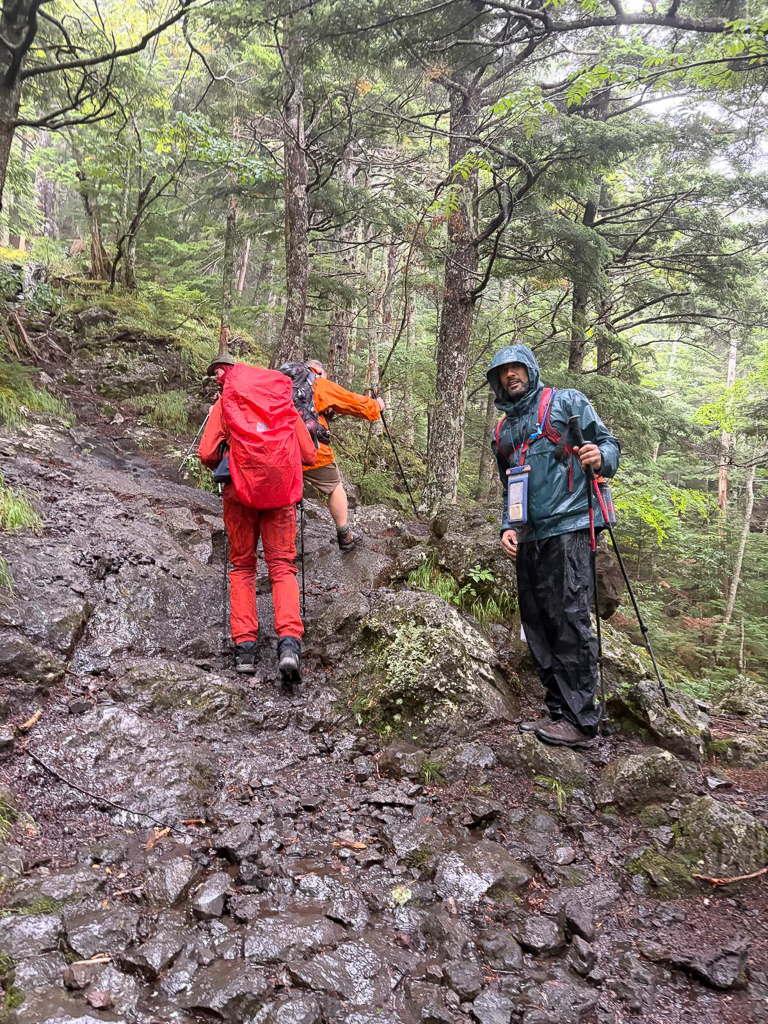
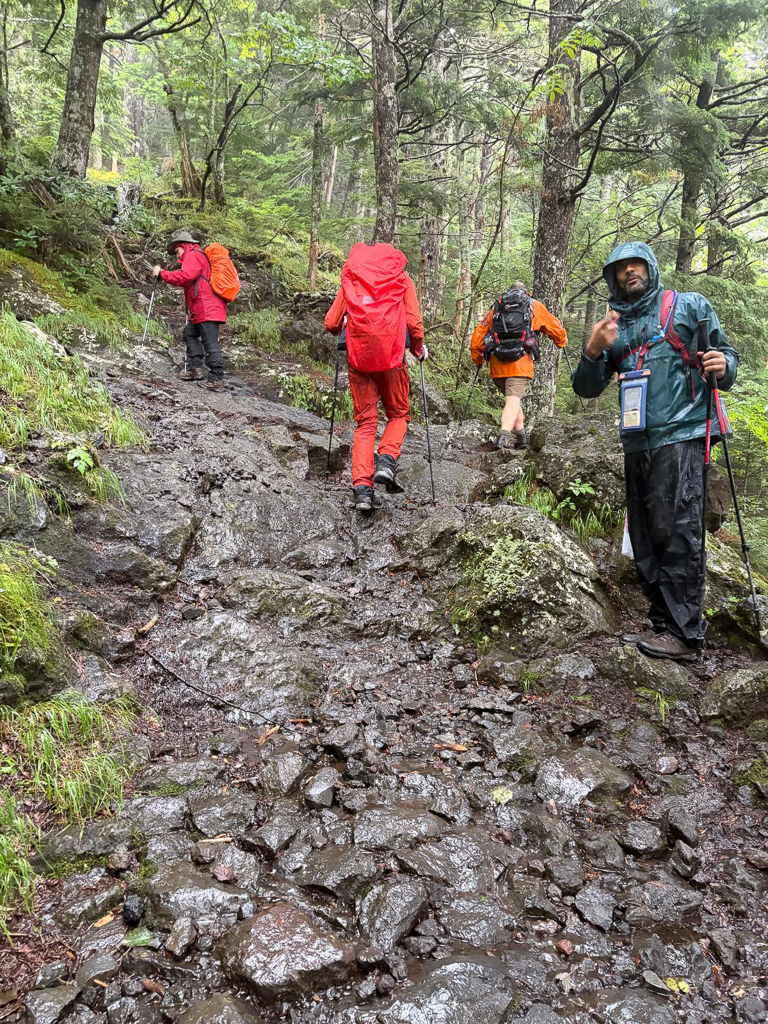
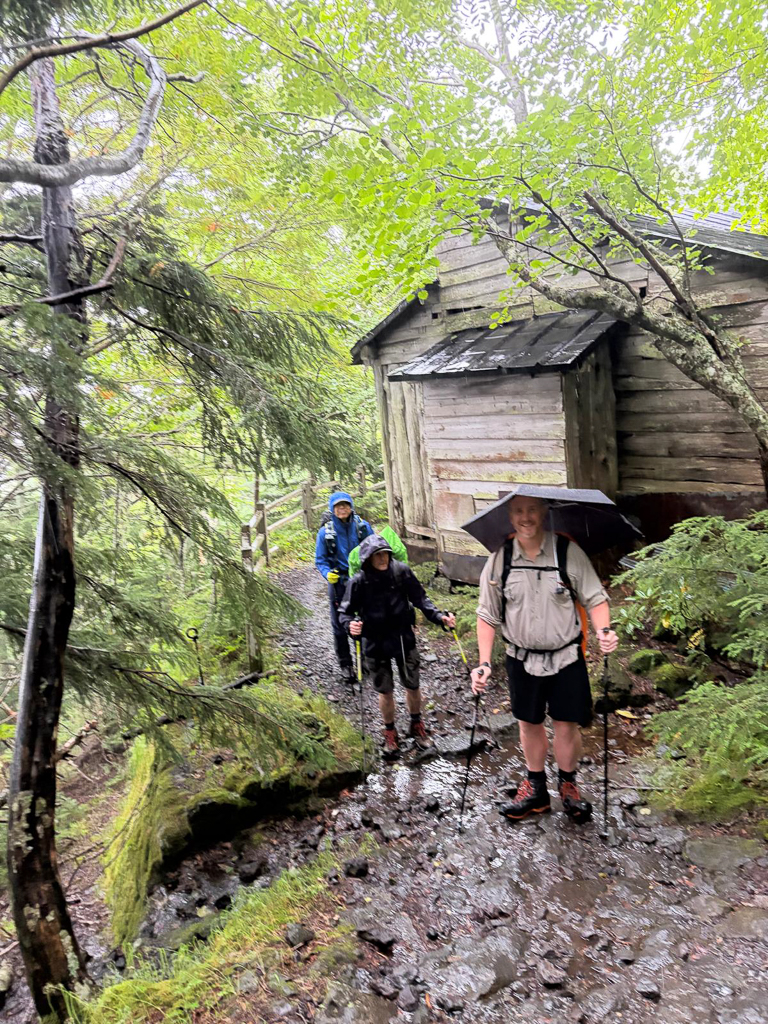
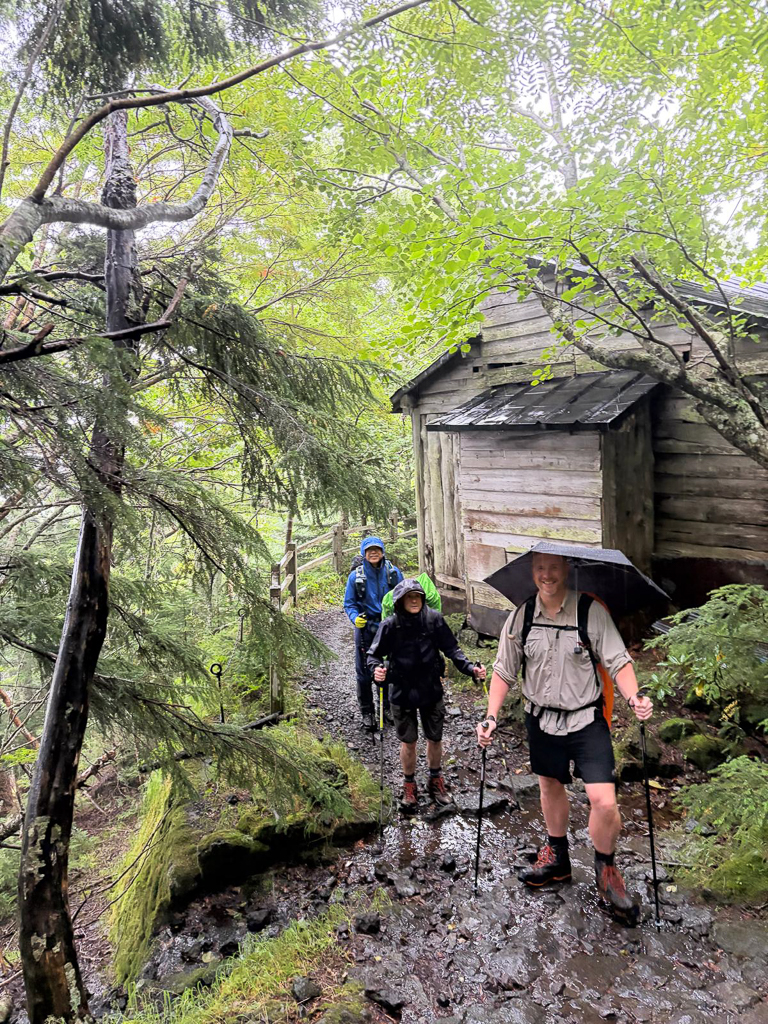
The route became a stream of wet timber, stone, mud and roots.
WEATHER CONTEXT Typhoon No. 24 (Krovanh) was south of Japan, but it was feeding warm, humid air into the autumn rain front over Honshu. Forecasts warned of worsening rain across Kanto-Koshin and the Fuji area.
On the ground that meant: less grip, heavier kit, colder stops and far less room for error.
Station by station
The historic route turns the climb into a series of old checkpoints. In the rain, each one became a small objective – somewhere to regroup, check the team and keep pushing uphill.
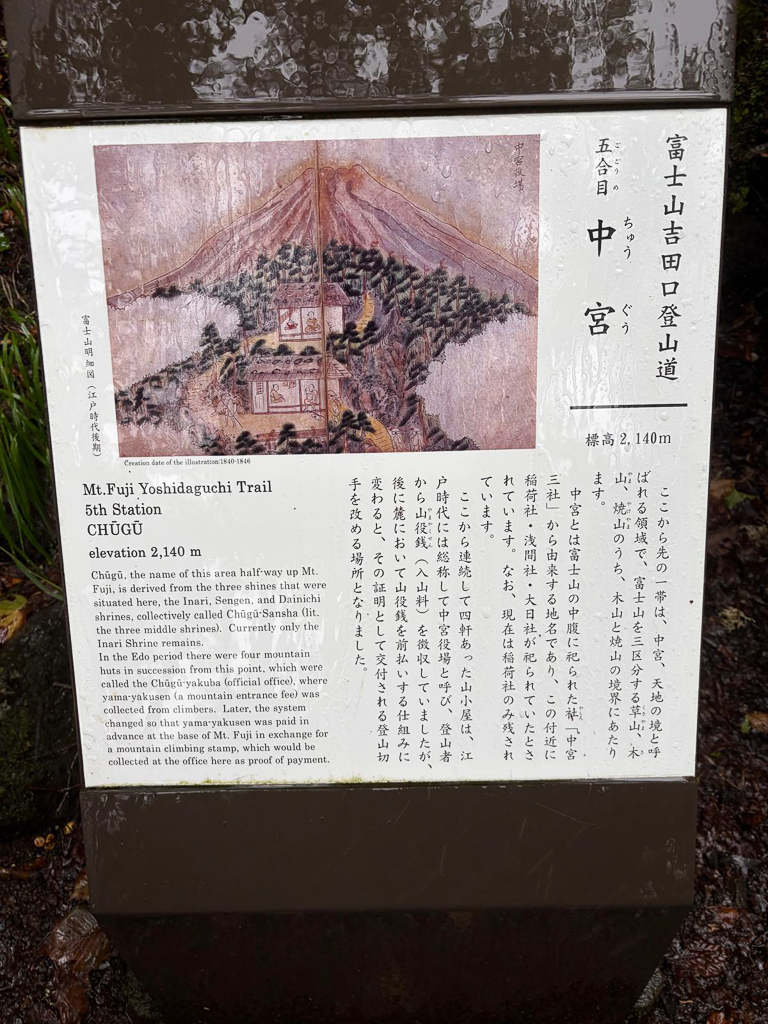
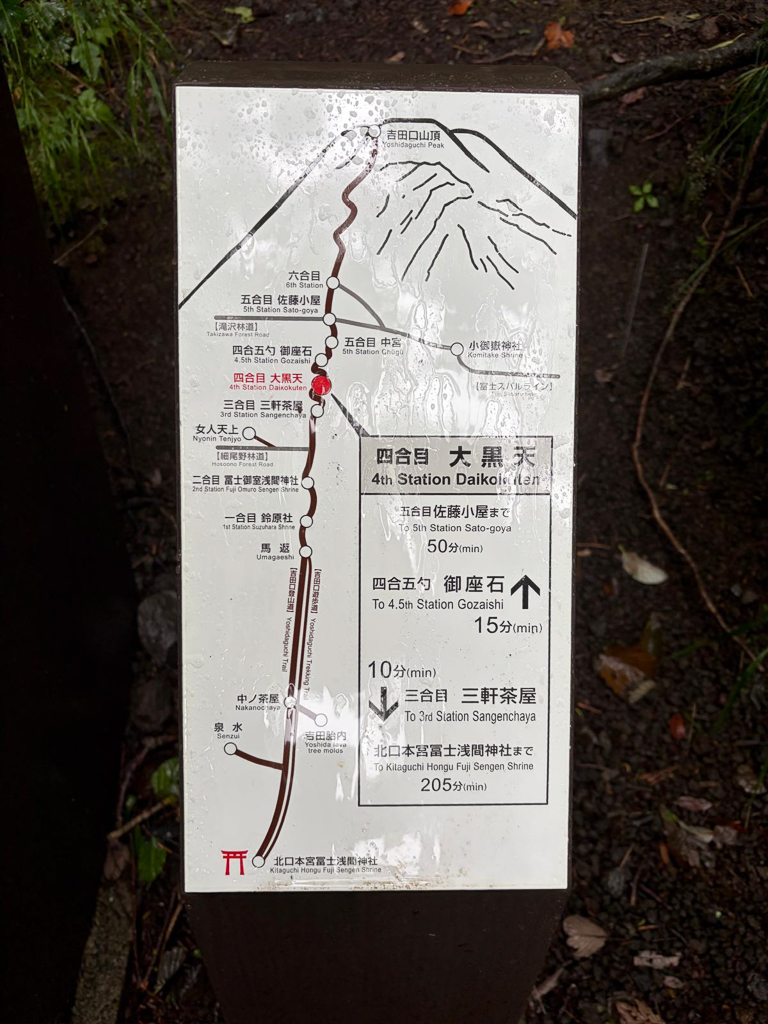
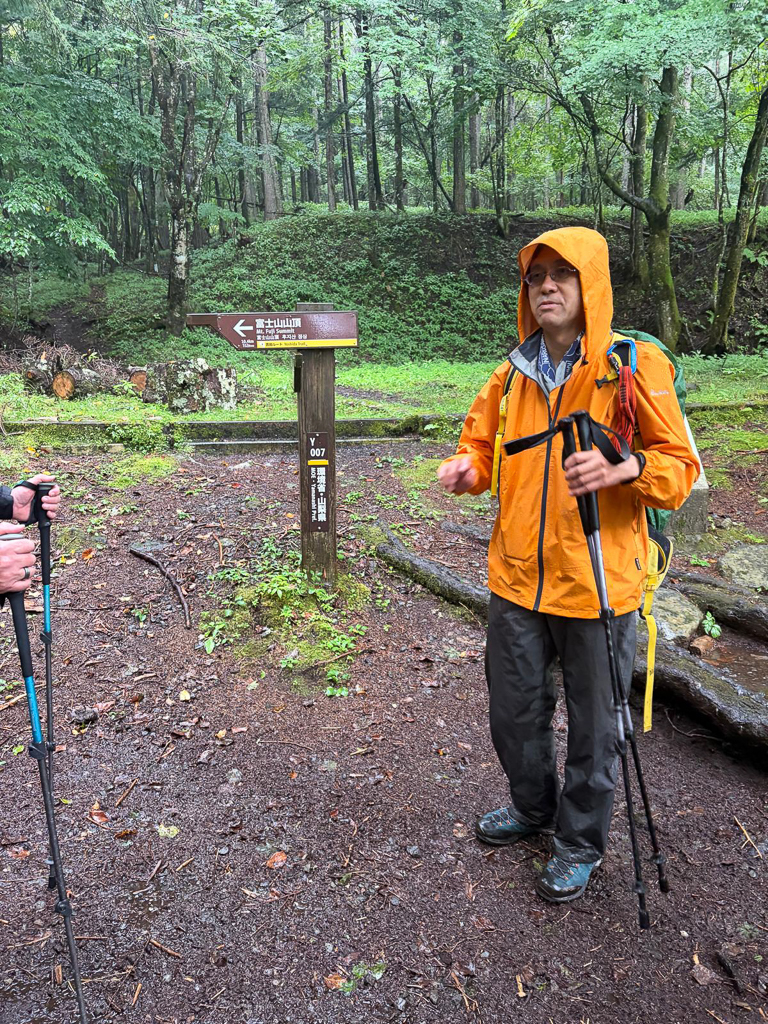
3rd Station Sangenchaya – 1,840 m. |
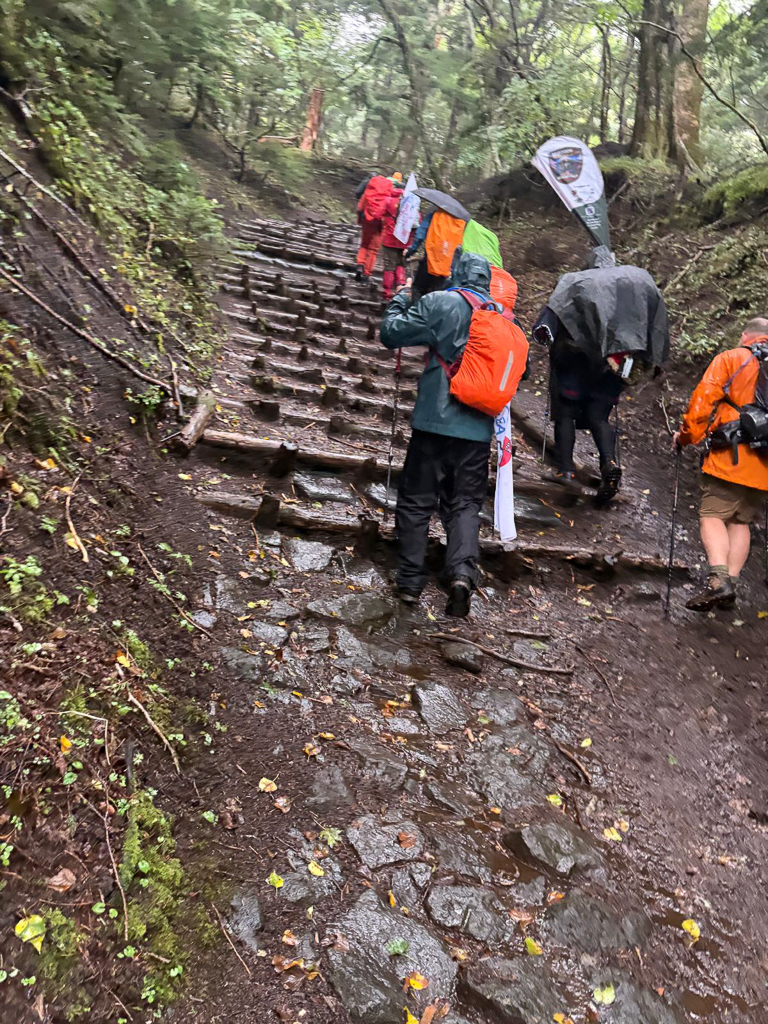
Water running across the lower climb. |
Sangenchaya was once known for three tea houses where Fuji pilgrims stopped to rest. This time there was little sense of a leisurely pause. Rain and forest closed in around the team, and the priority was simply to stay warm and keep moving.
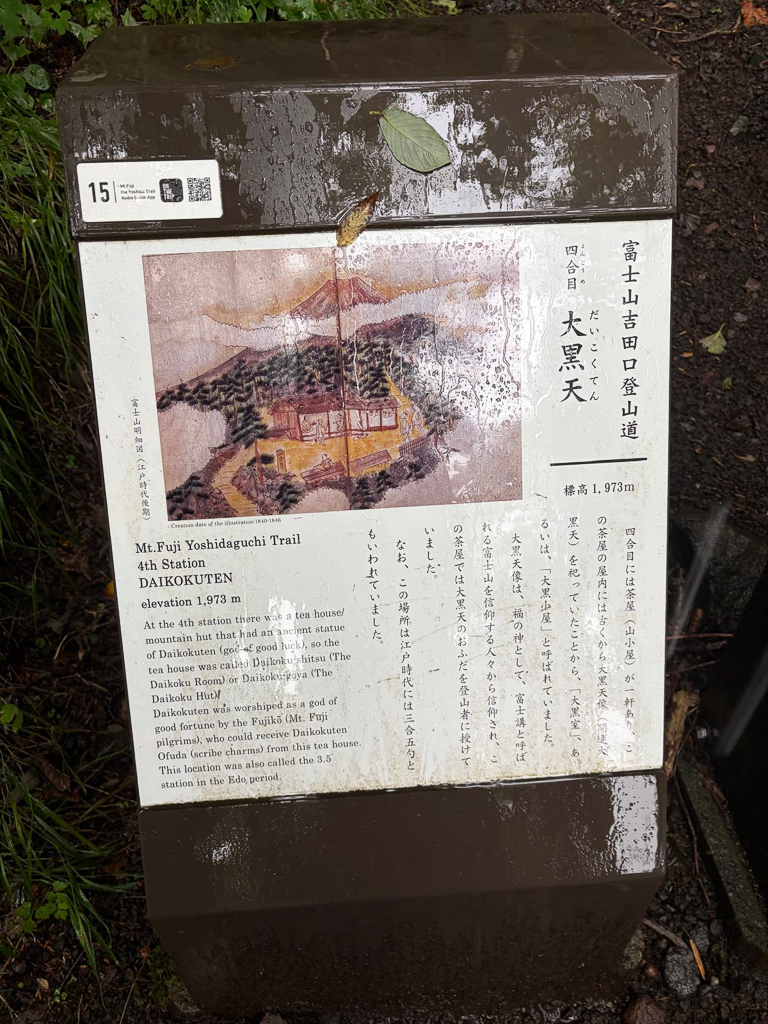
4th Station Daikokuten – 1,973 m. |
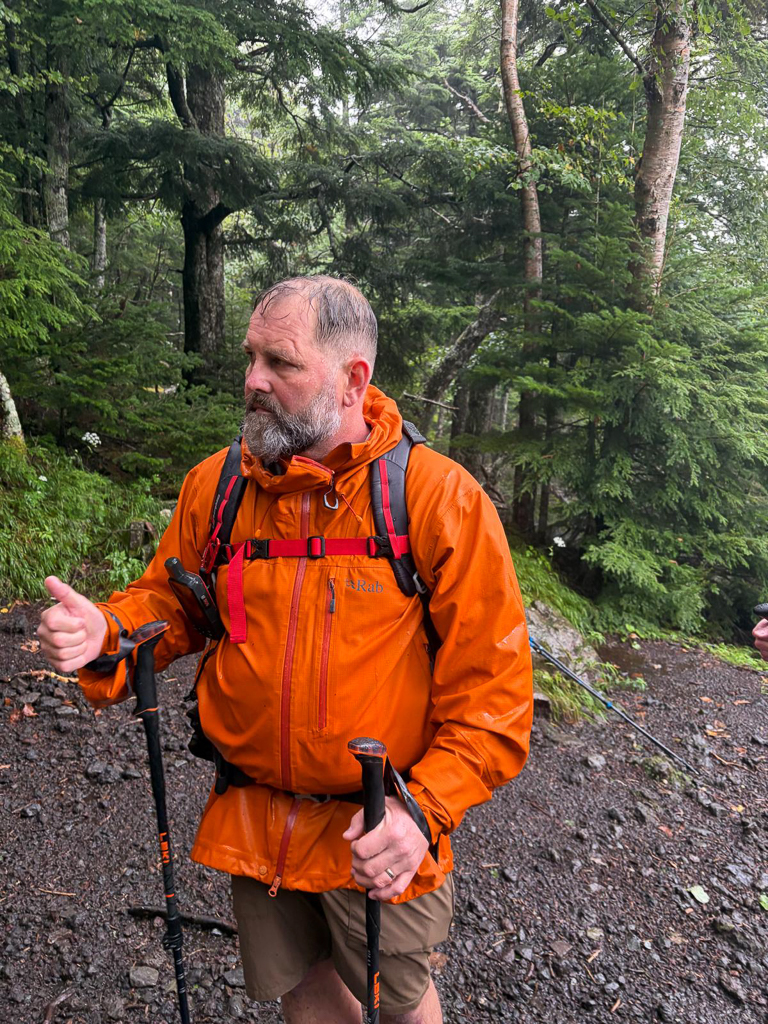
Steeper, slicker terrain higher up. |
At Daikokuten, Edo-period climbers once received charms for good fortune. A little luck would not have gone amiss. The higher the team climbed, the more the route rewarded concentration rather than speed.
When the challenge stopped being theoretical
| https://www.facebook.com/reel/1773831348075791
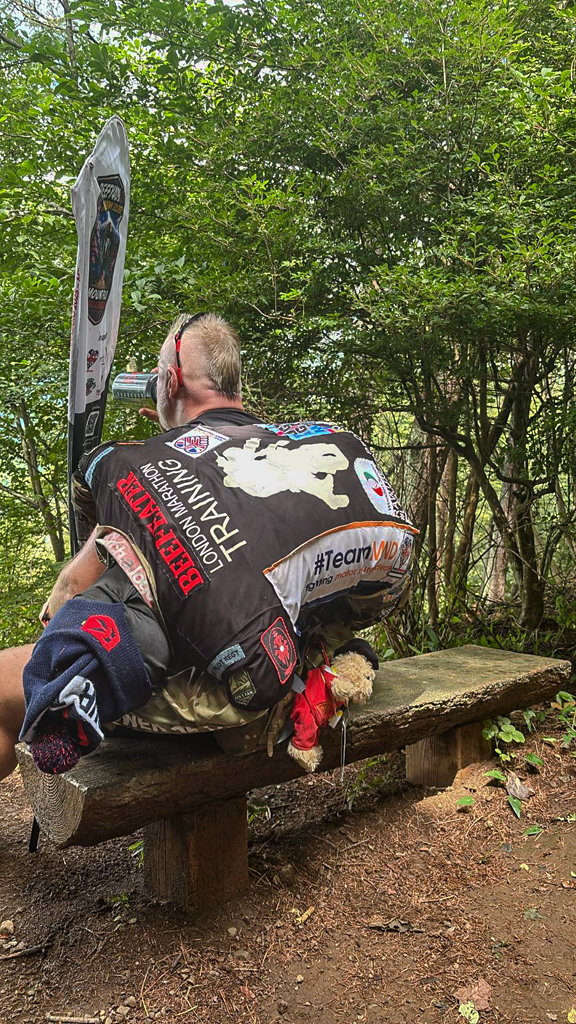
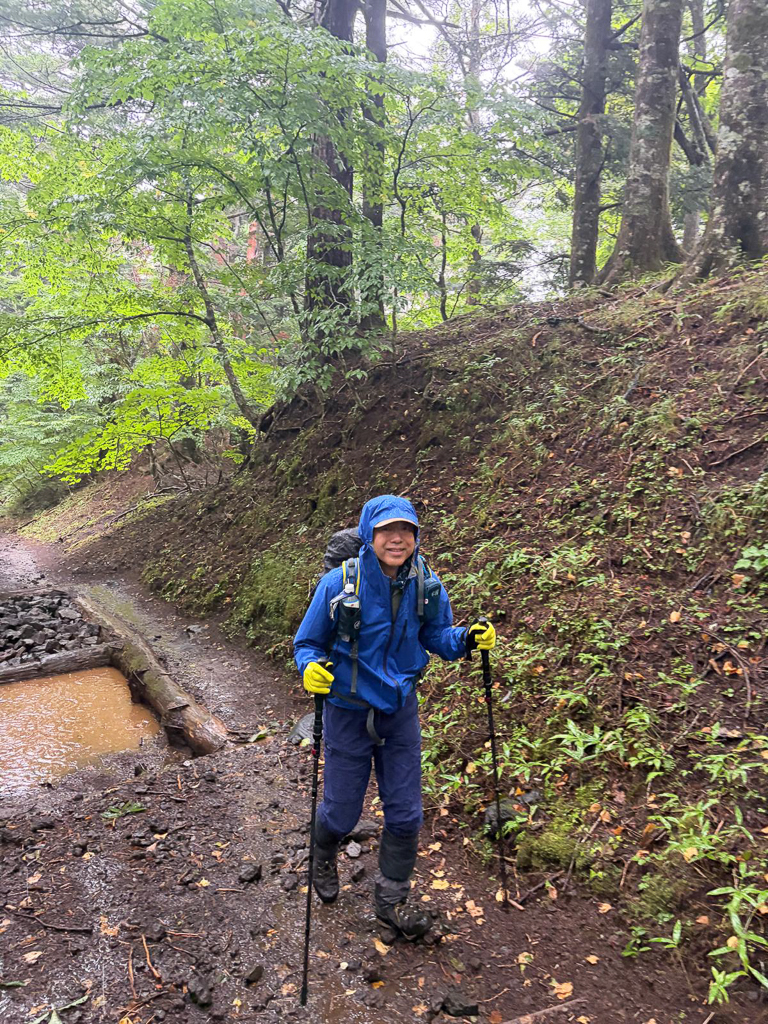
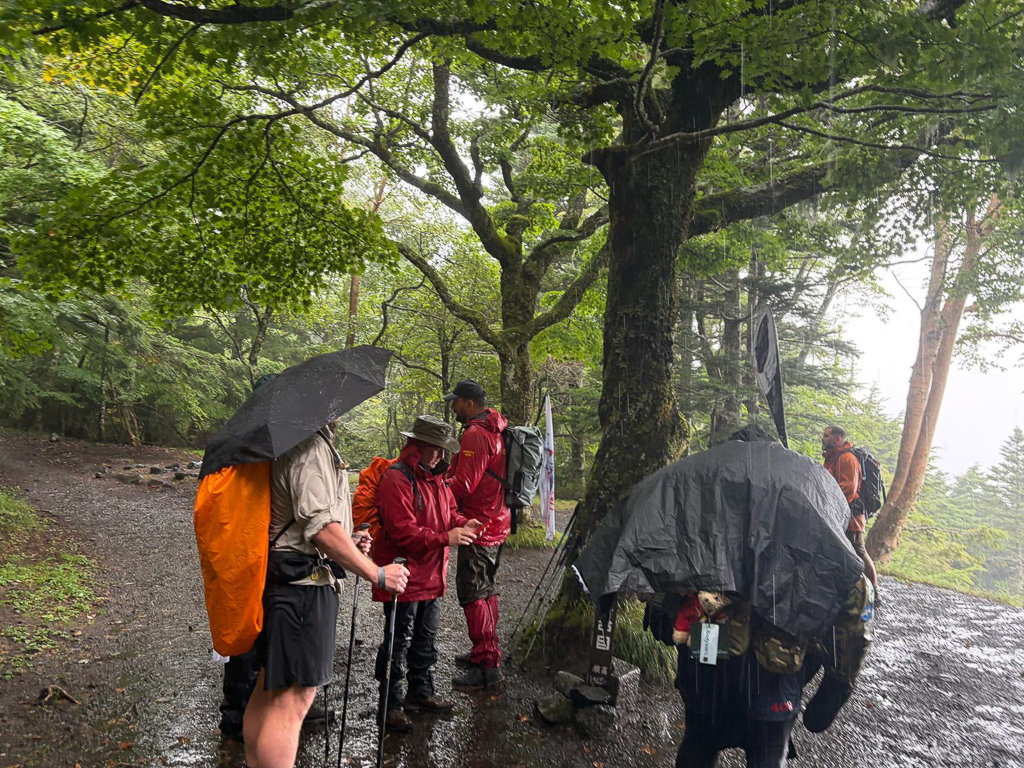
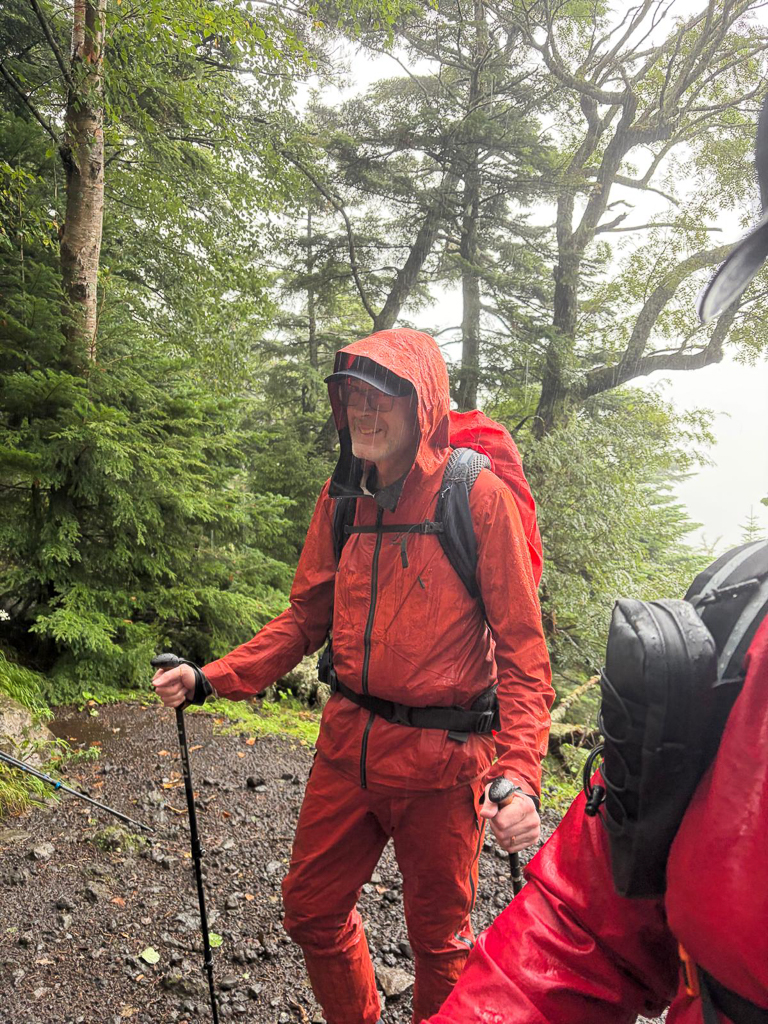
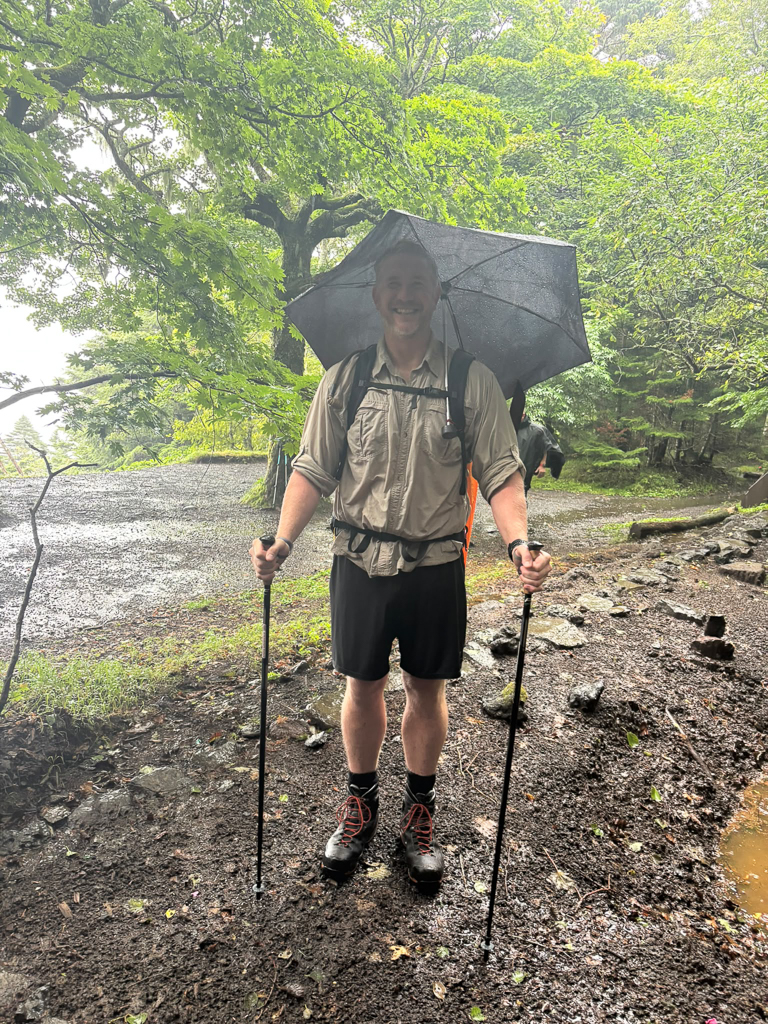
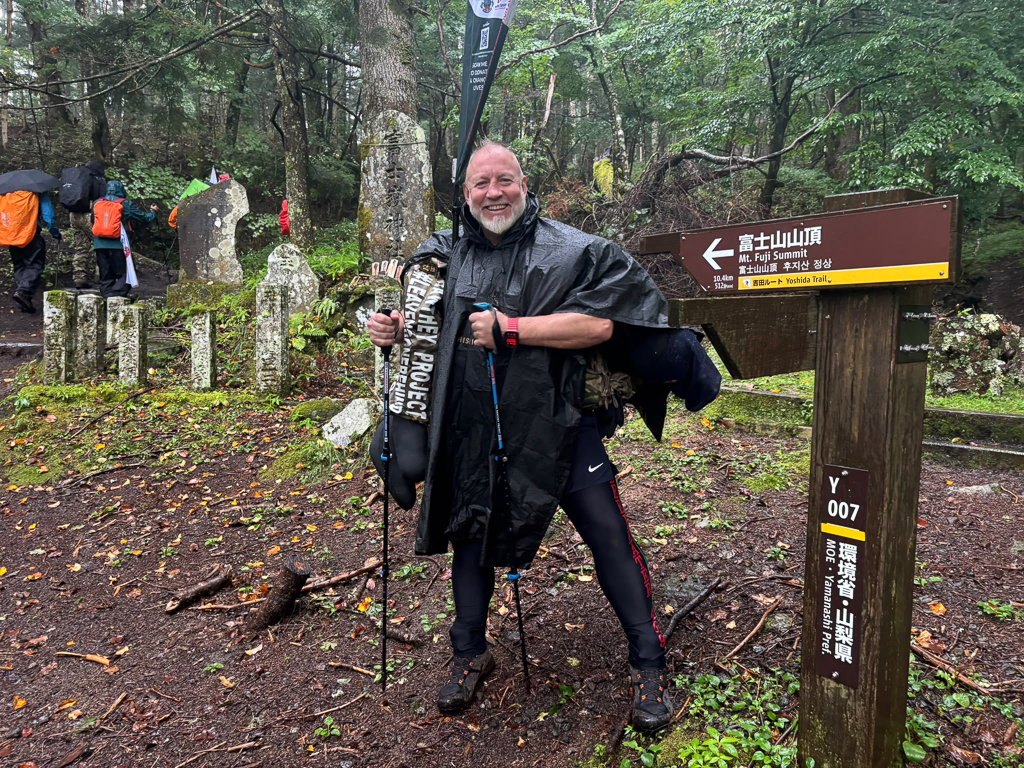
Beefy409 during a wet stop. |
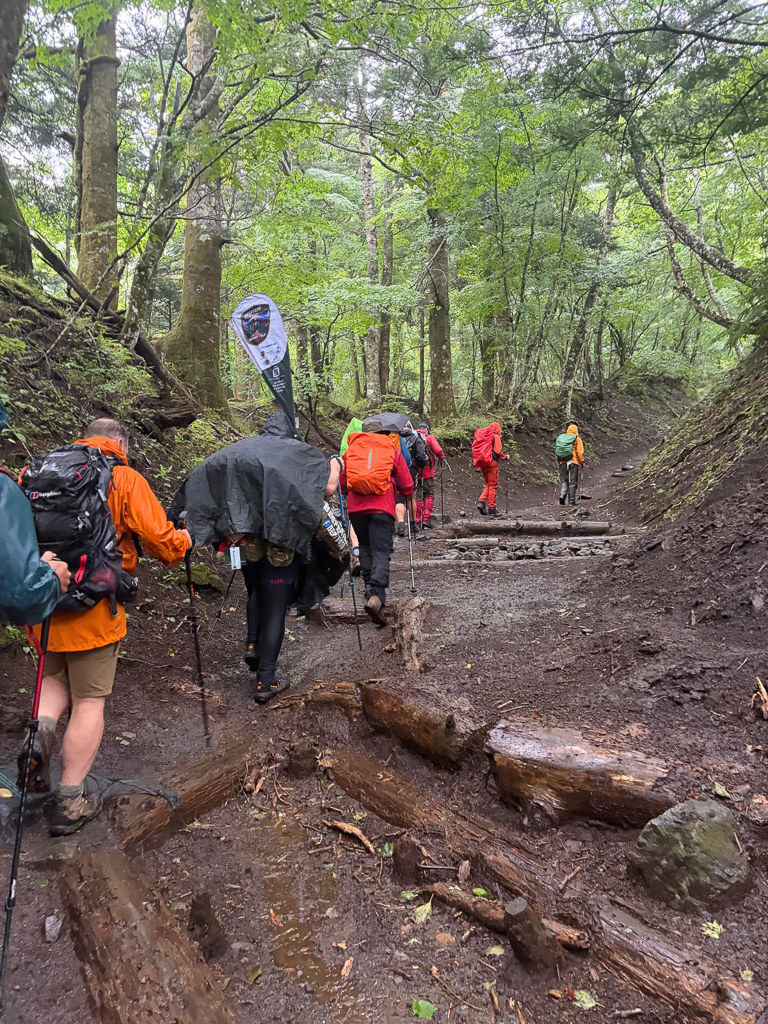
Progress through deep mud and soaked ground. |
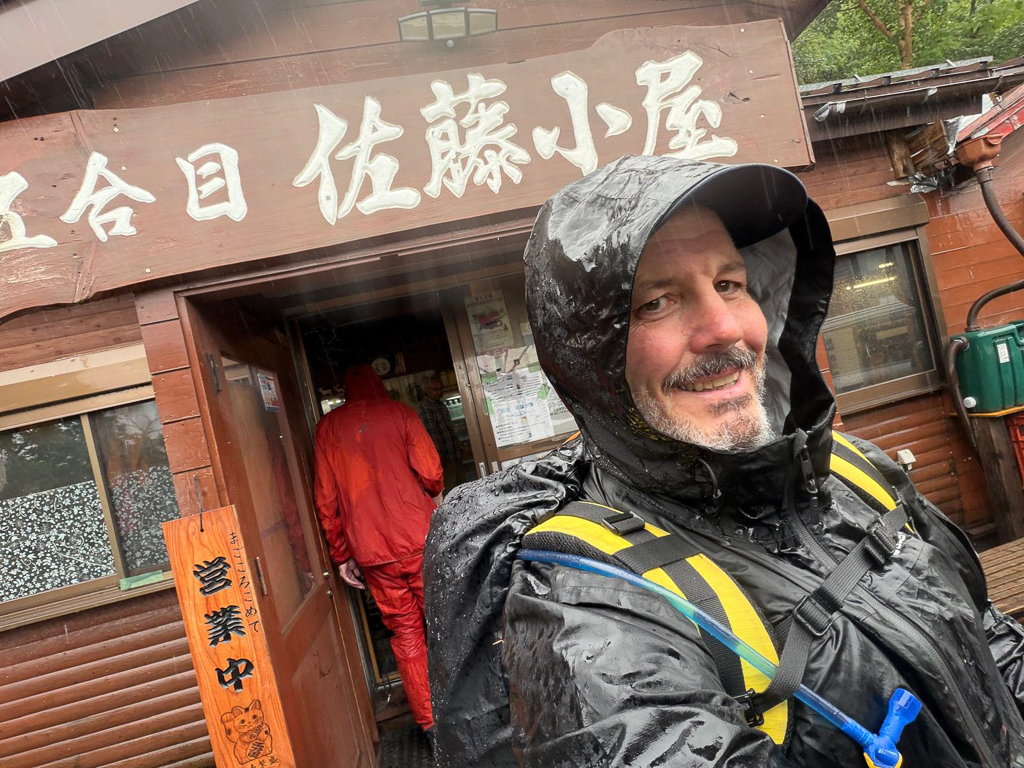
Everyone knew Fuji weather could turn. Knowing that in advance and living it for hours are different things. Rain gear soaked through at the edges, packs collected water and every stop became a battle to avoid getting cold.
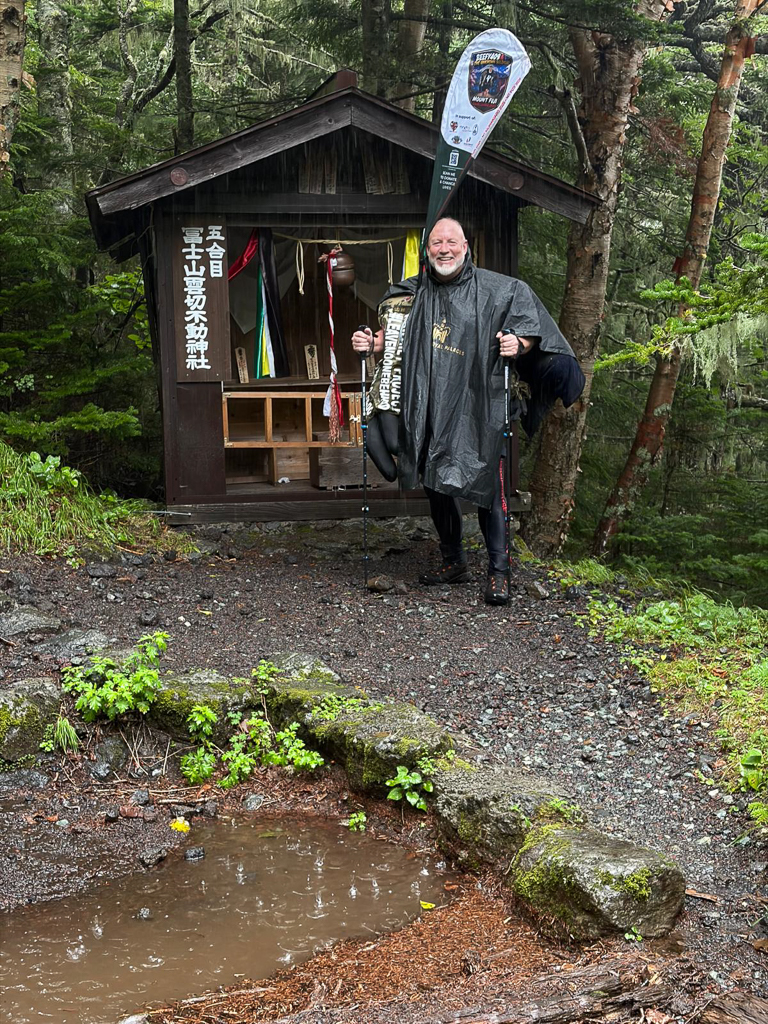
This is where the team element mattered most. The aim was never to race one another. It was to move together, share the work and make sure nobody was left behind – including the Unknown Soldier carried as the physical symbol of that promise.
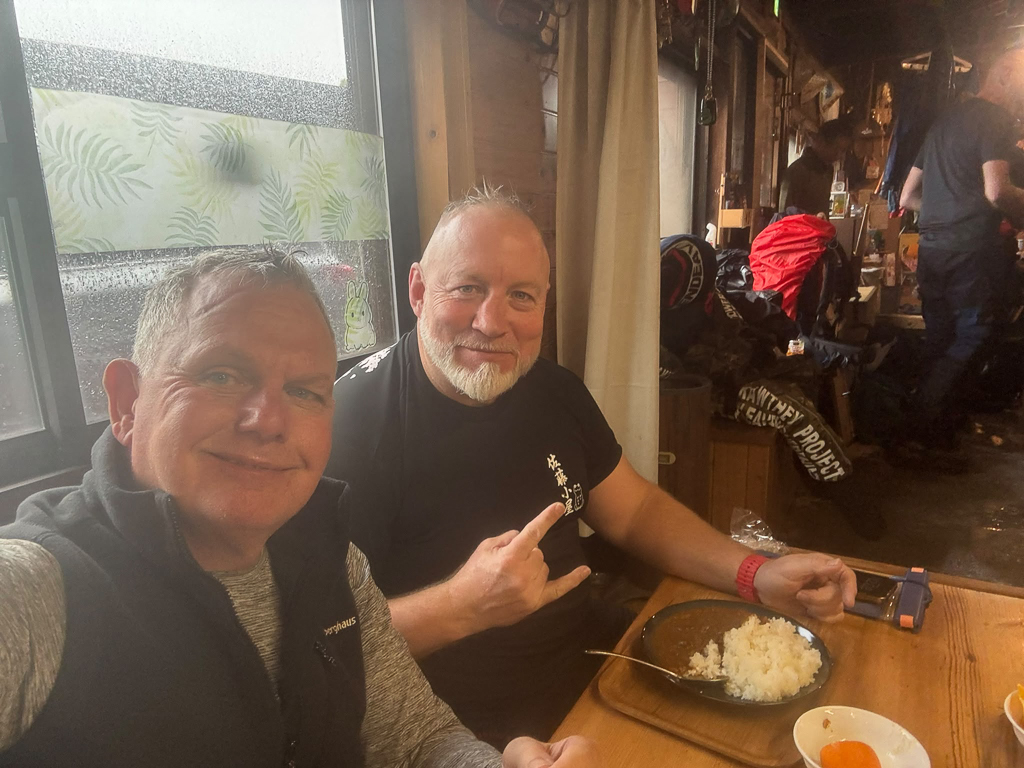
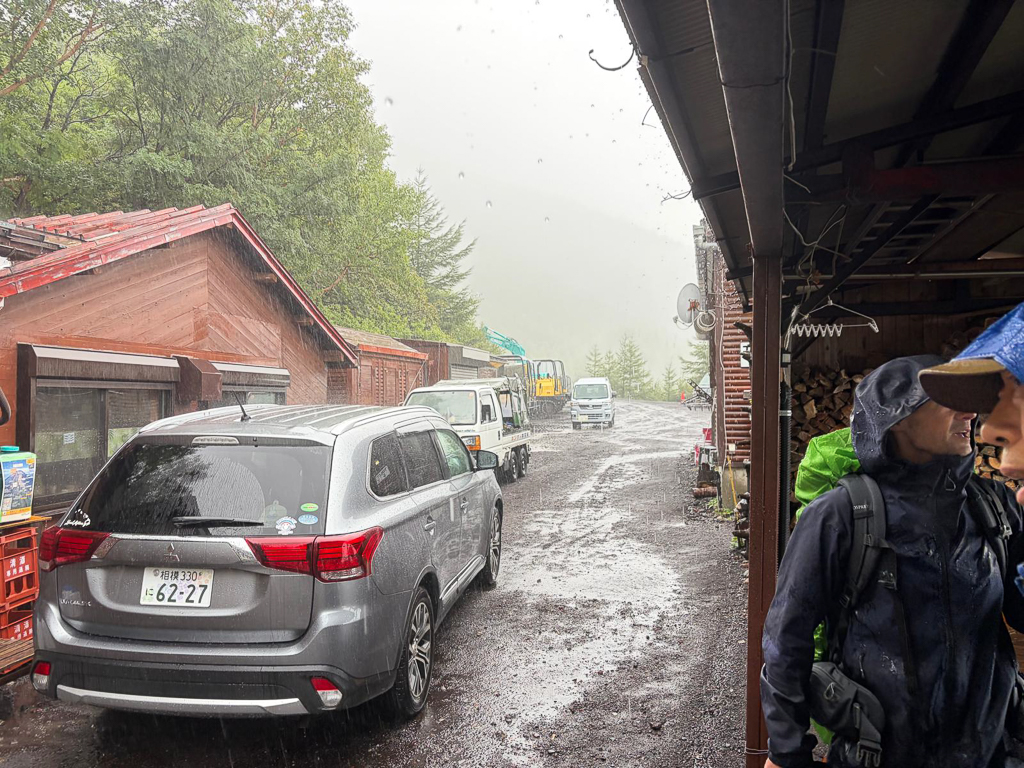
A brief stop at a mountain hut before stepping back into the rain.
Slower. More deliberate. More dependent on each other.
The 5th Station – a checkpoint, not a finish
5th Station Chugu – 2,140 m. |
The summit still 8.7 km away. |
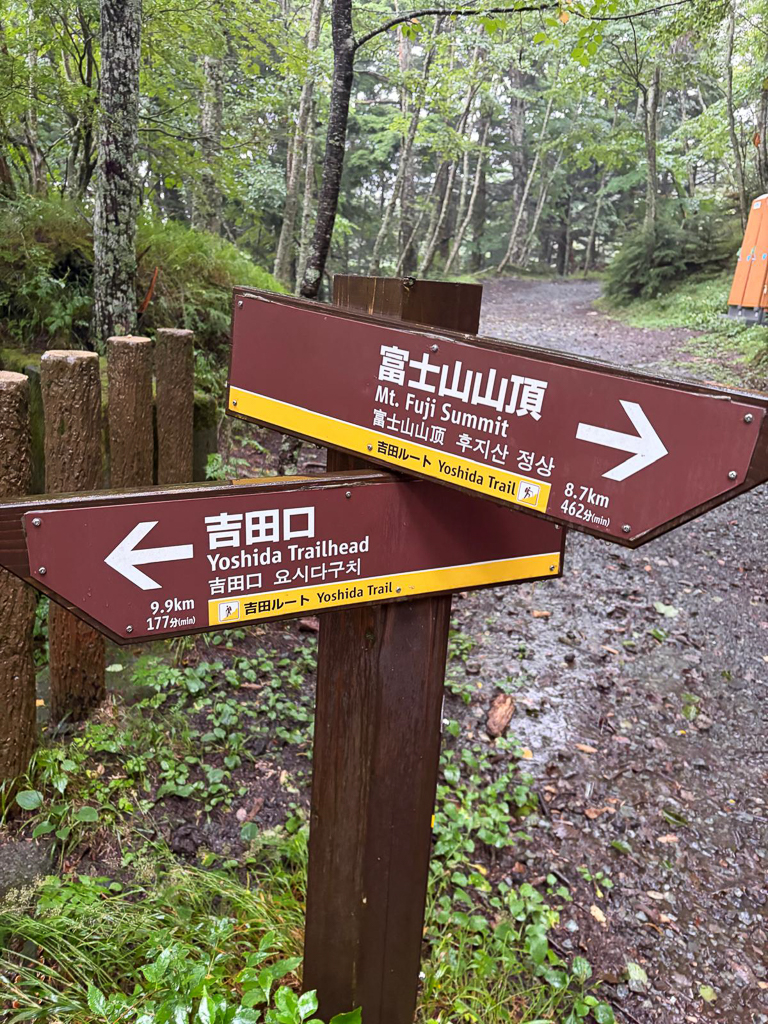
Reaching the old 5th Station at Chugu put the team at around 2,140 metres. Historically, this was part of Fuji’s sacred middle zone. For Team Endeavour it was a hard-earned checkpoint after a day made significantly tougher by the weather.
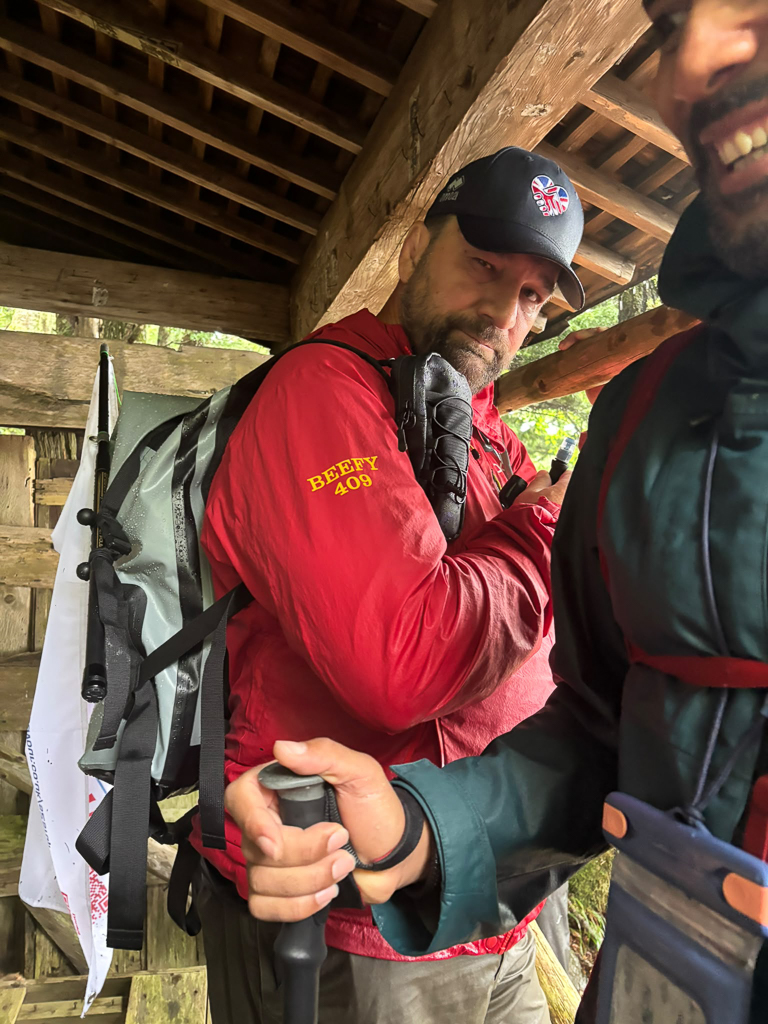
A chance to get out of the worst of the weather, reset and refuel.
There is nothing glamorous about recovery: wet layers come off, hot food disappears quickly and everyone starts thinking about what comes next. But the atmosphere changes. The team has made the day work.
Refuel. Reset. Go again.
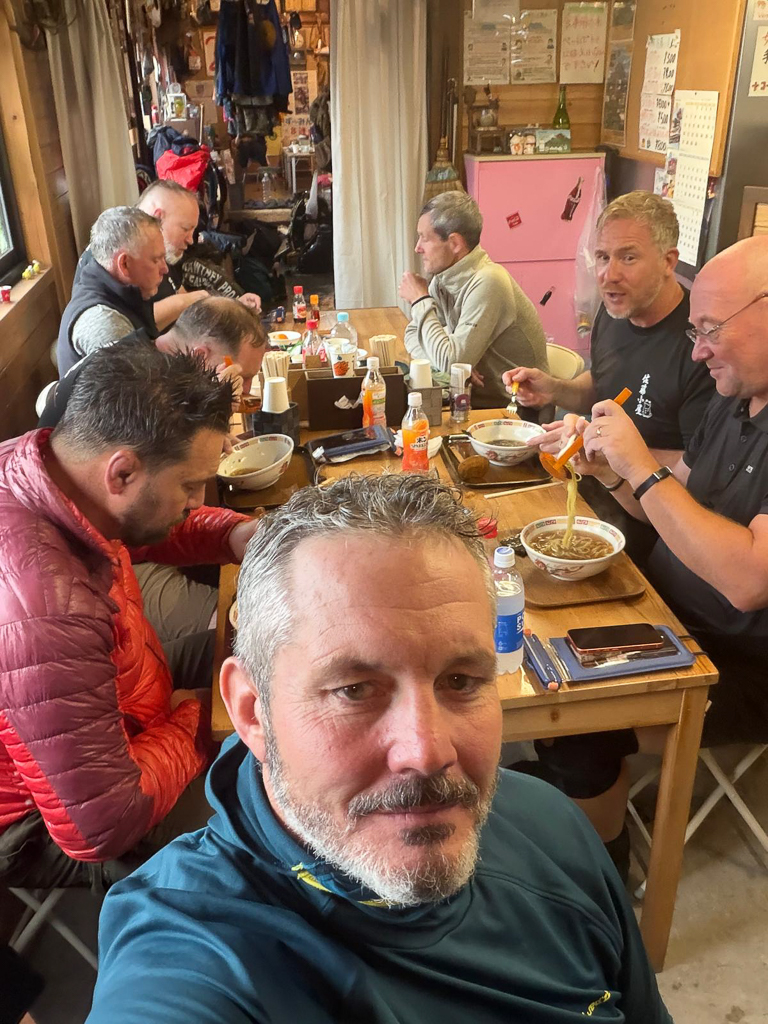
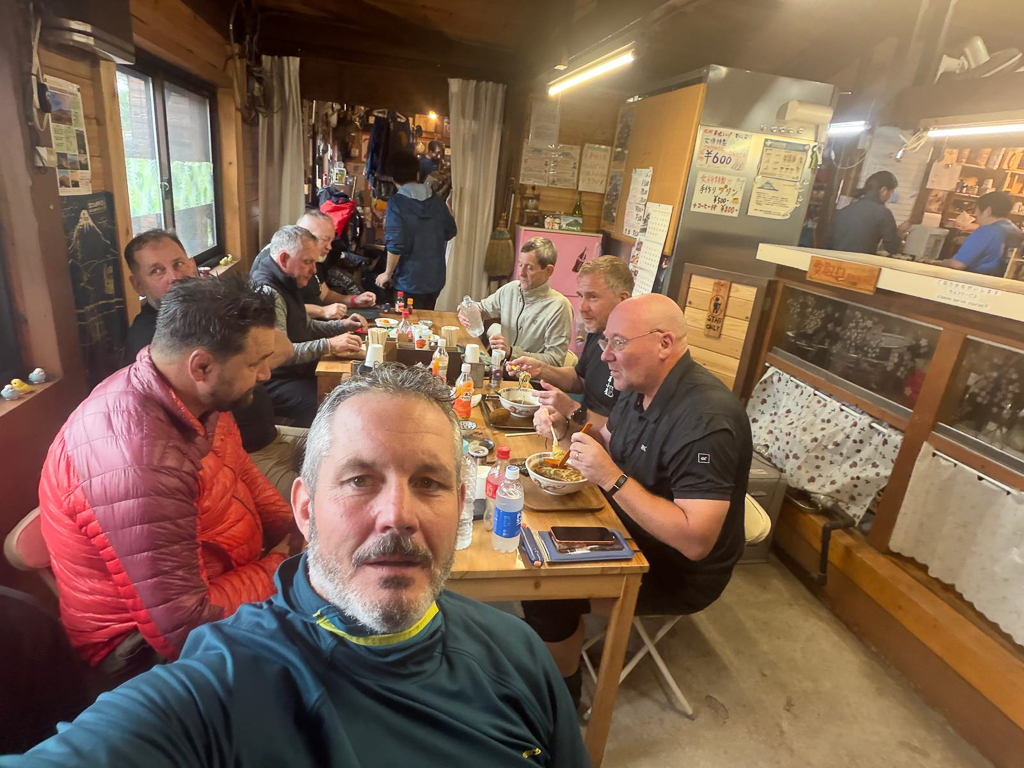
Warm food after the climb. |
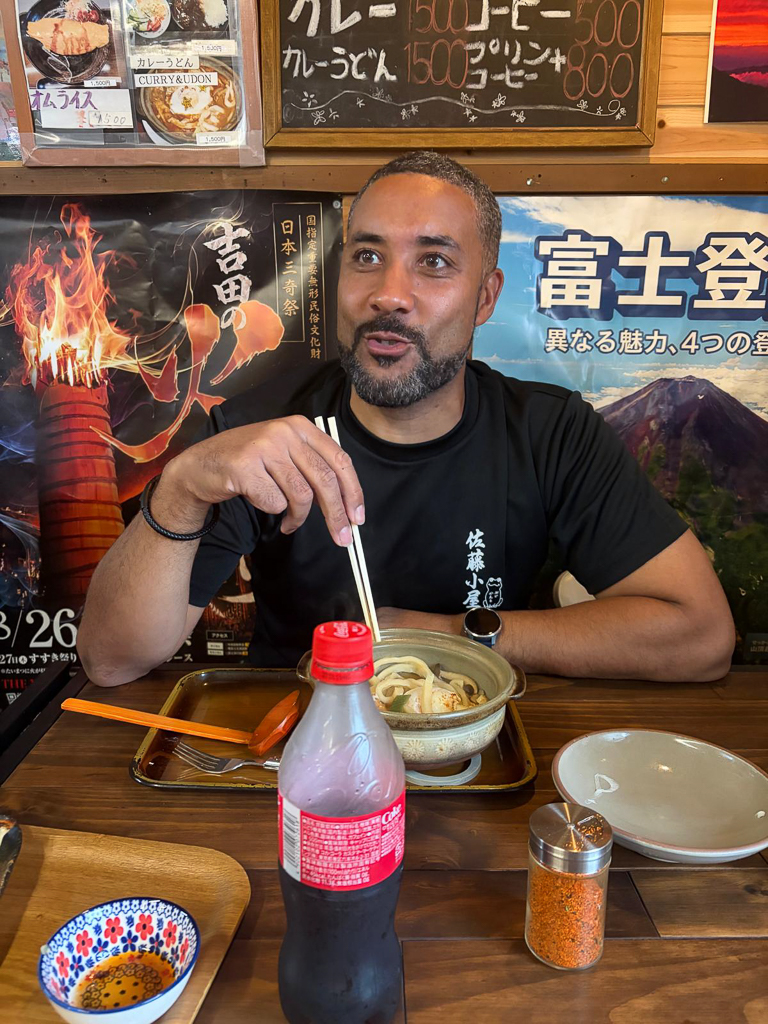
A much-needed break indoors. |
The contrast could hardly have been sharper: from rain hammering the forest to bowls of hot food and dry seats. It was a simple reward, but an important one. The next stage of the challenge still sat above them.
Sea to Summit was never meant to be an easy route to a famous photograph.
It was designed to demand something physically, mentally and collectively. On this section of Fuji, the weather supplied that demand in abundance. The mountain became slower, colder and more technical. The team adapted and kept climbing.
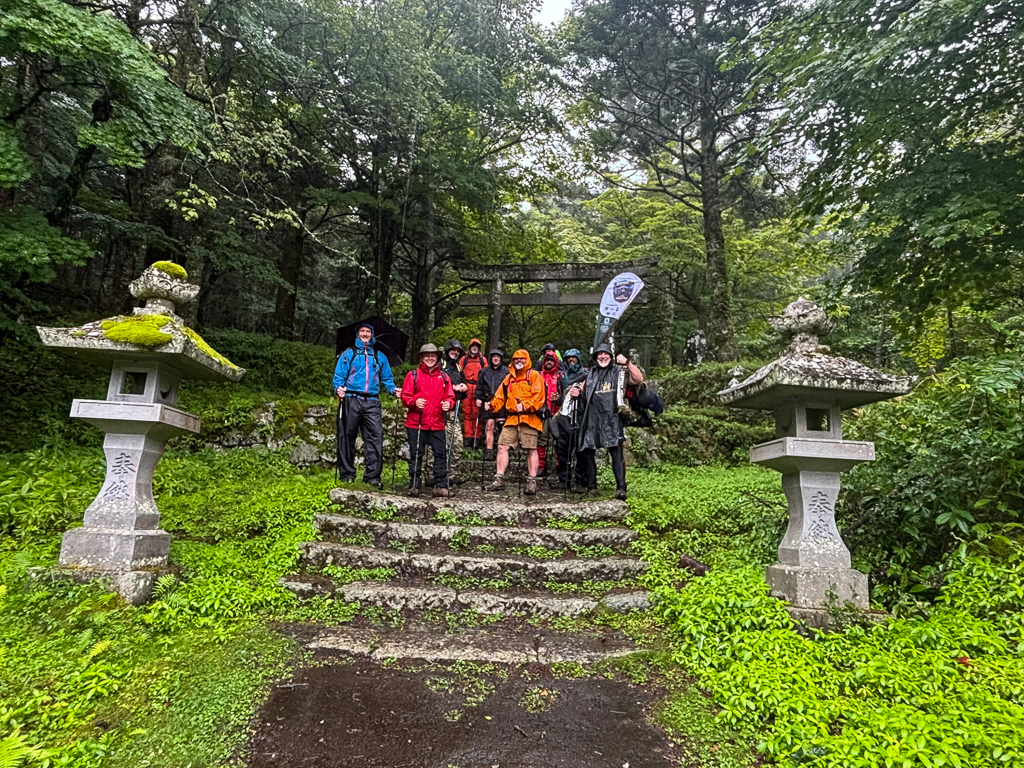
Soaked, tired and still together.
Station by station. Metre by metre. Together.
Recent Comments